

7 Design Ideas for a Functional and Beautiful Paver Driveway
A well-designed driveway does more than provide a place to park. It shapes the first impression of the property, guides vehicles safely, supports drainage, and connects the home to the surrounding landscape. A paver driveway can combine strength with visual flexibility because homeowners can choose from many colors, shapes, patterns, and border styles. The right design should look attractive while also supporting daily use, vehicle movement, maintenance, and long-term durability. Thoughtful planning can help prevent awkward traffic flow, uneven surfaces, water problems, and a disconnected appearance. By considering both beauty and function, homeowners can create an entrance that complements the architecture of the home and improves the overall outdoor experience. The following ideas show how practical features and creative design choices can work together to produce a driveway that feels intentional, polished, and well-suited to the property.
1. Choosing a Pattern That Supports Traffic Flow
The laying pattern influences both the appearance and performance of the surface. Herringbone patterns are often chosen for areas that experience frequent vehicle movement because the interlocking arrangement distributes pressure in multiple directions. Running bond and basket-weave patterns can create a more relaxed appearance, while modular layouts can add visual variety without making the driveway feel overly busy. The pattern should suit the size and shape of the area so vehicles can enter, turn, and park without the design appearing distorted.
Homeowners should also consider the direction in which the pattern leads the eye. Pavers installed lengthwise can make a short driveway appear longer, while patterns placed across the width may help a narrow space seem broader. Curved layouts can guide vehicles smoothly toward a garage or parking area. Selecting a pattern that supports movement makes the paver driveway easier to navigate while reinforcing the intended style of the landscape and home.
2. Adding Borders That Define the Edges
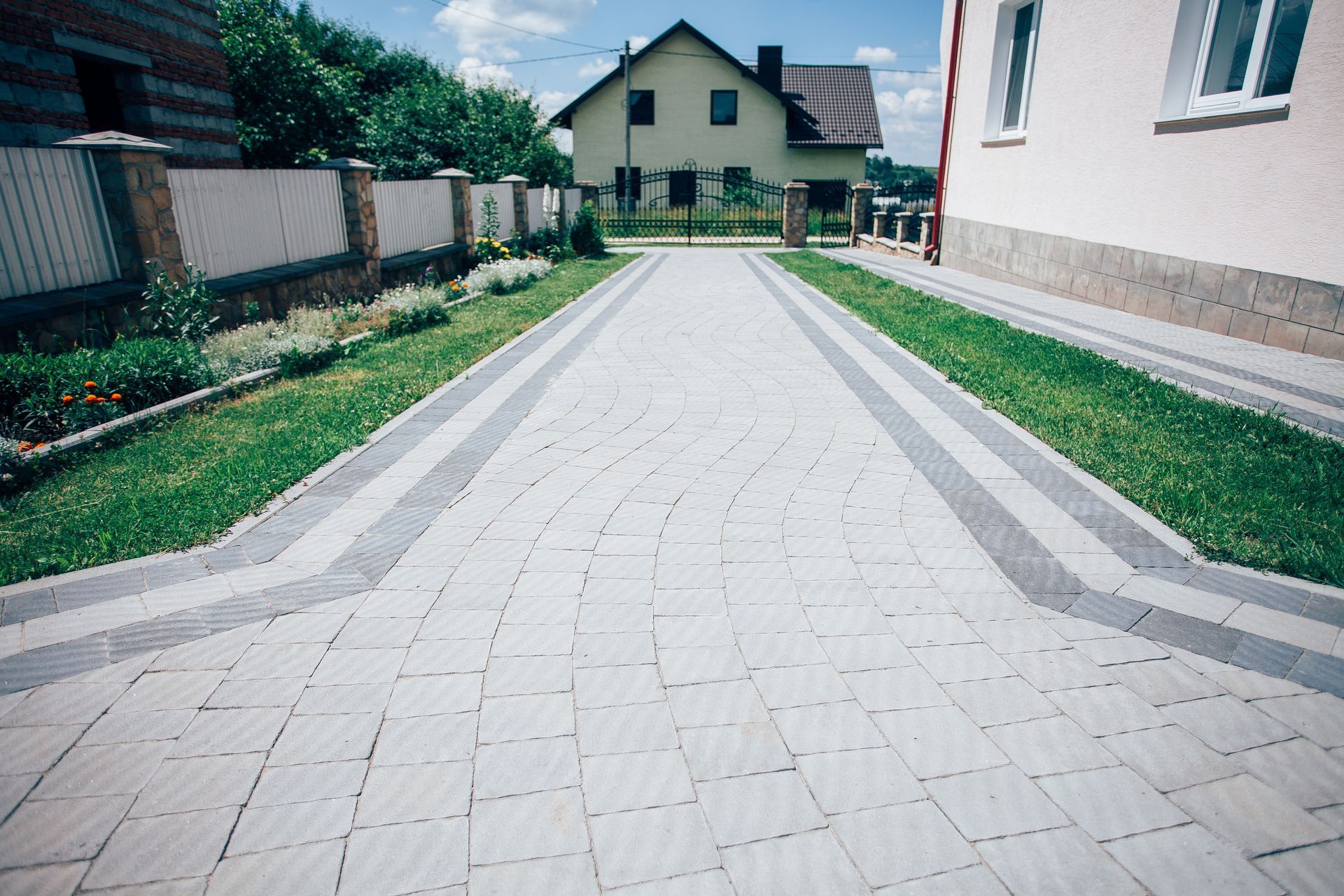
Borders give a driveway a finished appearance while clearly separating it from lawns, planting beds, walkways, and neighboring surfaces. A contrasting border can frame the main field of pavers and create a stronger visual connection to the trim, roof, or masonry on the house. Darker edge pavers can add definition, while subtle tonal differences create a softer transition. Borders can also be used to emphasize curves, parking pads, or the entrance near the street.
Beyond appearance, well-planned edging helps keep pavers in position and reduces spreading at the perimeter. This is especially important where vehicle tires repeatedly pass close to the edge. A professional installation may include proper restraints beneath or alongside the visible border to support long-term stability. Combining decorative borders with secure edge support allows the paver driveway to remain attractive and structurally sound through regular use and seasonal ground movement.
3. Combining Colors That Complement the Home
Color selection can help the driveway feel like a natural extension of the property rather than a separate feature. Warm earth tones often pair well with brick, stone, and traditional siding, while charcoal, gray, and slate shades can complement contemporary exteriors. Blended color collections may hide dust, tire marks, and minor surface variation more effectively than a single flat color. The goal is to coordinate with the home without creating an exact match that feels overly uniform.
It is also helpful to view samples outdoors under different lighting conditions. Morning sun, afternoon shade, and wet weather can all change how the colors appear. Homeowners may choose a neutral main field and reserve stronger tones for borders or accent bands. This approach creates depth while keeping the overall design balanced. Thoughtful color planning can improve curb appeal and help the driveway remain visually appealing as landscaping and exterior finishes change over time.
4. Incorporating Curves That Improve Access
Curves can soften the look of a large paved area and improve the way vehicles approach the home. A gently curved entrance may create a more welcoming transition from the street, especially on properties with wider front yards or garages positioned at an angle. Curves can also help drivers avoid trees, utility features, steep grades, or established landscaping. When designed correctly, they make the route feel natural rather than forced.
Turning space should be planned with the size of the vehicles that regularly use the property in mind. Families with trucks, delivery traffic, or multiple drivers may benefit from broader curves and clearly defined parking areas. Decorative bands can follow the curve and make the shape easier to read from behind the wheel. A carefully planned paver driveway can improve access while reducing the need to drive over grass, planting beds, or walkway edges.
5. Creating Inlays That Add Visual Interest
Inlays allow homeowners to introduce a focal point without changing the entire surface. A circular medallion, geometric motif, contrasting rectangle, or simple band can break up a broad driveway and create a customized appearance. These details work especially well near the center of a turnaround, in front of a garage, or at the entrance from the street. The design should remain proportional so it enhances the space without interfering with parking or vehicle movement.
For a more understated look, inlays can use the same paver style in a different orientation rather than a dramatically different color. This creates texture and distinction while maintaining a cohesive palette. Repeating an inlay pattern in nearby walkways or patios can also connect separate outdoor areas. Used carefully, decorative accents make the driveway memorable while preserving the clean, organized appearance needed for a functional residential entrance.
6. Planning Drainage That Protects the Surface
Drainage should be part of the design from the beginning because standing water can affect comfort, safety, and long-term performance. The driveway should have an appropriate slope that directs water away from the garage, foundation, and frequently used walking areas. Depending on the property, the plan may include permeable pavers, drainage channels, catch basins, or open joints filled with suitable aggregate. These features help manage runoff without distracting from the overall appearance.
Proper base preparation is equally important because water beneath the surface can contribute to settling, movement, or frost-related damage. Contractors should evaluate soil conditions, grading, and surrounding drainage before installation begins. When water management is integrated into the layout, the paver driveway is better prepared to handle seasonal rain and everyday use. Good drainage also helps reduce puddles, icy patches, erosion, and water flowing into unwanted areas of the property.
7. Including Lighting That Improves Visibility
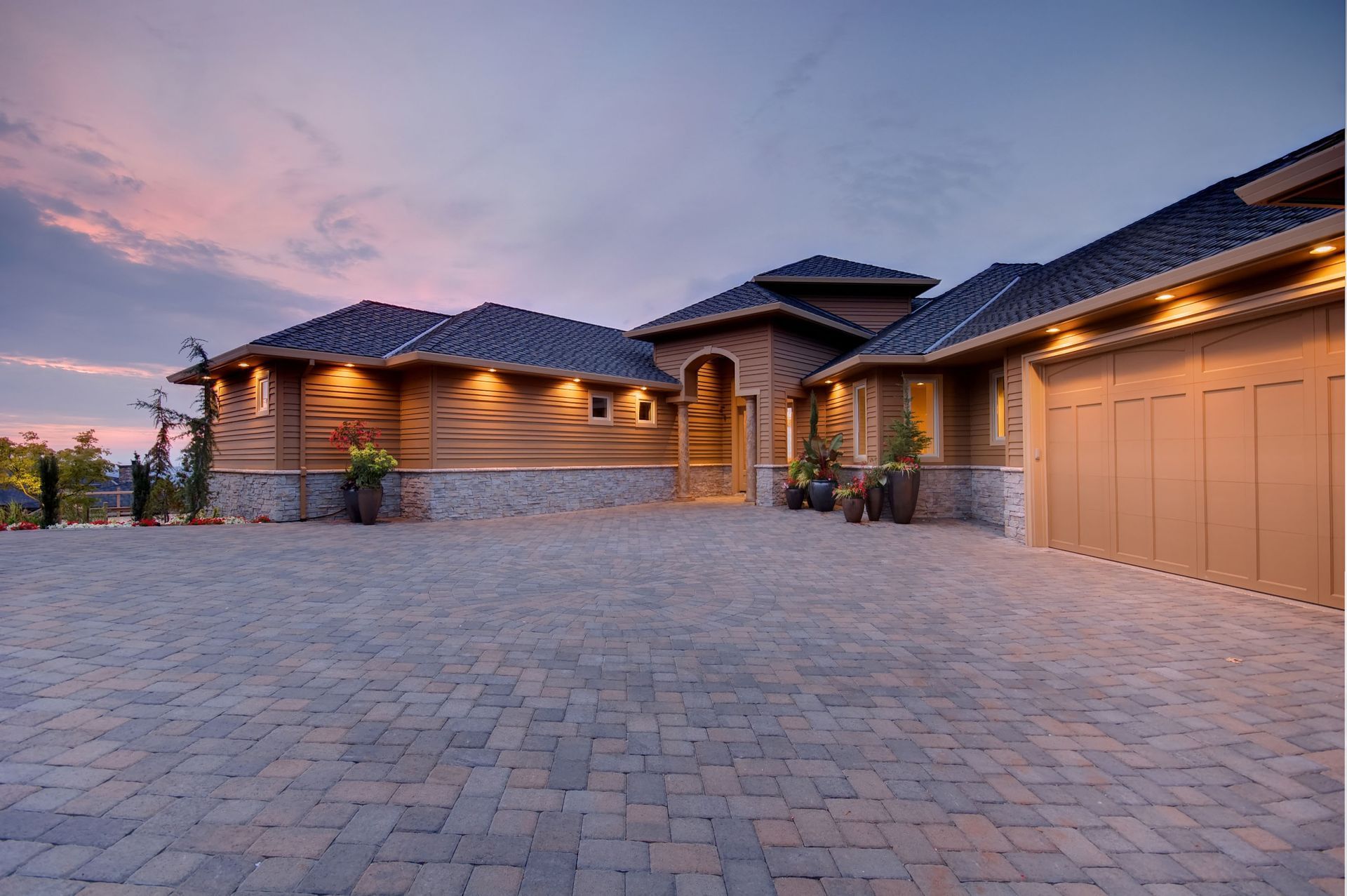
Lighting can make a driveway safer and more attractive after dark. Low-voltage fixtures along the edges can help drivers identify curves, borders, and changes in elevation, while lighting near the garage improves visibility during parking. Recessed fixtures, illuminated columns, and nearby landscape lights can create a layered effect without overwhelming the property. The placement should guide movement and highlight important features rather than producing harsh glare.
Homeowners can also use lighting to emphasize special patterns, entry pillars, planting areas, or architectural details. Energy-efficient LED fixtures and timers can provide consistent illumination while keeping operating costs manageable. According to HomeGuide, installing a paver driveway can increase your home's value while providing an average return on investment of 69%. Combining an attractive surface with thoughtful lighting can strengthen curb appeal and make the entrance feel more secure, polished, and welcoming.
A functional and beautiful driveway begins with a design that considers how the space will look, drain, and perform every day. Patterns can improve visual flow, borders can strengthen the edges, coordinated colors can connect the driveway to the home, and curves can make vehicle access easier. Inlays, drainage features, and lighting can add personality while supporting comfort, safety, and durability. Professional planning is important because excavation, base preparation, grading, edge restraint, and installation quality all influence the final result. With the right design choices, a paver driveway can become a lasting part of the landscape rather than simply a place to park. To explore customized design and installation options for your property, contact S & S Pavers.


Share On: